

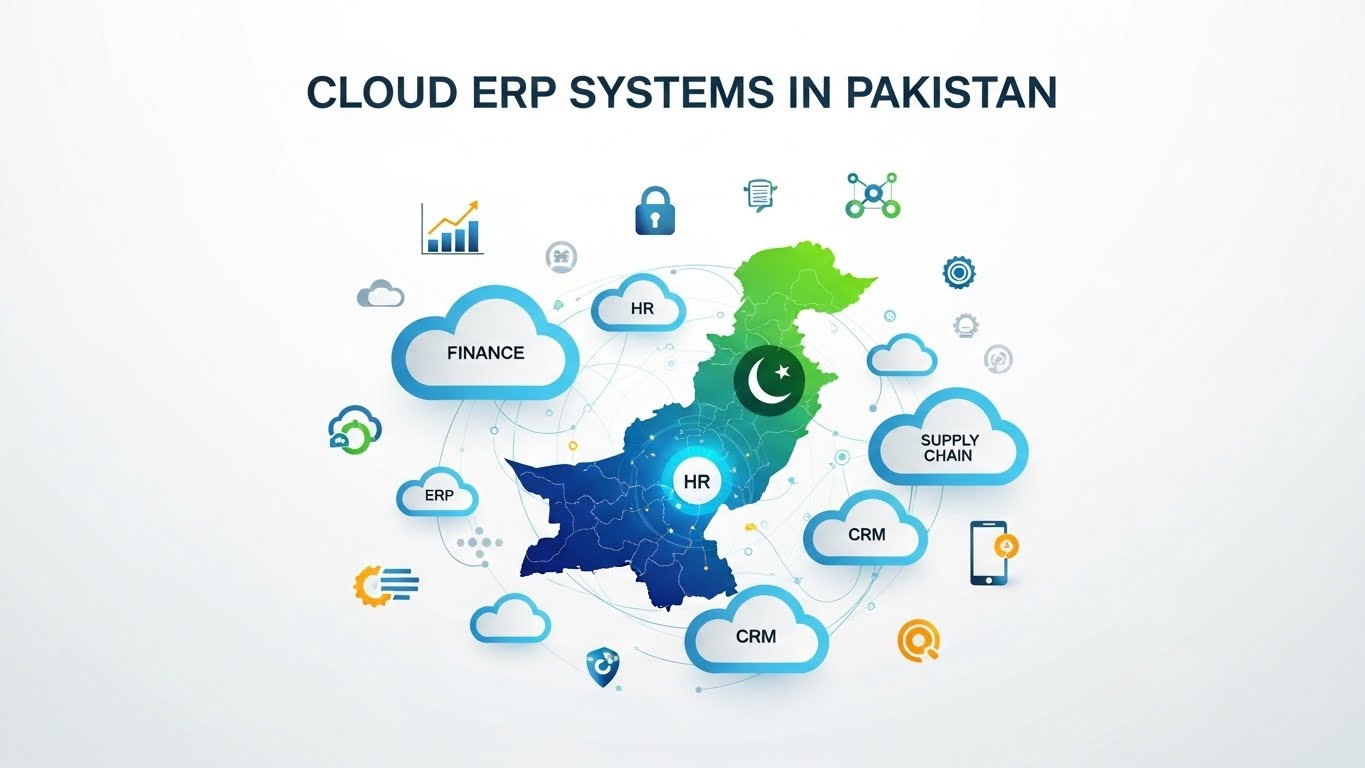
Modern businesses in Pakistan require efficiency, automation and real-time access to data. Companies are using the Cloud ERP Systems in Pakistan for seamless management of operations, from manufacturing in Sialkot and trading in Karachi.
This guide includes:
- What is a cloud ERP system?
- Why Pakistani business needs to be able to access the internet
- Success stories in real life
- Step-by-step selection guidance
- Answers to questions such as How much does cloud-based ERP cost?, Is SAP cloud-based ERP? and Salary of an ERP consultant in Pakistan
- Investments today: Benefits, hidden benefits, and other reasons to invest
What is a Cloud Based ERP System?
Many businesses wonder What is an ERP cloud system?
A cloud ERP system is a software platform that integrates major business functions, from finance and human resources to sales and inventory, in one place.
Imagine it as a dashboard that shows your entire business, and is accessible anywhere.
The employees don’t have to install heavy software on multiple computers. Cloud computing ensures real-time collaboration and access.
Why Pakistani businesses are shifting to cloud ERP
The traditional desktop ERP system is prone to delays, errors, and miscommunication. With a Cloud ERP System Pakistan companies can:
- Real-time reporting
- Automating repetitive tasks
- Easy scalability
- Stronger data security
Anecdote : Sialkot manufacturer saved a key client
A sports goods producer in Sialkot was experiencing repeated delays with order tracking and reporting. The company was able to:
- Automated production tracking
- Real-time reporting to clients
- Eliminate manual errors
- Retaining a key client from abroad
This example shows how cloud ERP is critical to businesses in Pakistan.
What is the cost of cloud ERP?
The cost of a product varies depending on the following:
- Number of users
- Modules required (Finances, HR, inventory, CRM, etc.).
- Vendor Selection (local or Global ERP Providers)
- Implementation and Training
Pricing for Pakistani Businesses:
- Small Business: PKR 20,000 – 50,000/month
- Medium business: PKR 50,000 – 150,000/month
- Large enterprises: PKR 150,000 – 500,000+/month
Most companies begin with the core modules inventory, accounting, and sales, and then expand as necessary.
Does SAP offer a cloud-based ERP?
SAP is the leading ERP provider in the world. Business ByDesign, and S/4HANA cloud are both fully cloud-based.
The SAP software is available to Pakistani companies without the need for servers or IT infrastructure .
- Real-time data access
- Scalable modules
- Automated updates
- Secure enterprise grade security
Benefits of Cloud ERP in Pakistan
1. Real-time Access and Collaboration
ERP systems such as Microsoft Dynamics 365, Adoo and Microsoft Dynamics 365 provide:
- Instant visibility across departments
- Dashboards and real-time reporting
- Remote management for teams and management
2. Reduced Operating Costs
Traditional ERP is a complex system that requires IT staff, servers, and regular maintenance. Cloud-based ERP eliminates the need for these resources, making it ideal for small and midsize businesses.
3. Updates automatically and security
Vendors will handle all updates, backups and encryption to ensure your business is secure and compliant.
4. Scalability for Growing Businesses
Cloud ERP is a growing business. You can add:
- Users
- Branchs
- Modules
Without new hardware or software modifications.
The Industries of Pakistan that Benefit the Most
Manufacturing
Supports planning of production and raw material tracking.
Retail & E-Commerce
Allows real time inventory updates and automated billing.
Trading & Distribution
Improves forecasting and reduces errors in stock.
Textile & Apparel
Costing, tracking from stitching to packing, and export documents are all managed.
Healthcare
Track batches, expiry date, and patient records with ease.
Service Sector
Supports HR, payroll tracking, project management, and reporting.
Salaries of ERP Consultants in Pakistan
Another common question: What is an ERP consultant’s salary in Pakistan?
ERP consultants are critical to:
- Implementation
- Customization
- Training
- Troubleshooting
Salary Ranges in Pakistan:
- Junior ERP Consultant: PKR 50,000 – 80,000/month
- PKR 80,000 – 150,000 per month for mid-level ERP consultant
- Senior ERP Consultant: PKR 150,001 – 300,000.00/month
Hiring an ERP consultant will ensure smooth adoption of the system and maximize ROI.
A Step-by-Step guide to selecting a cloud ERP system in Pakistan
- Identify business needs Decide which modules are essential Accounting and Inventory, Production, CRM or HR.
- Cloud ERP is more cost-effective and secure than on-premise
- Compare Features Evaluate vendors’ dashboards, mobile applications, integration and reporting.
- Request for a Live Demo Test the usability of the application, workflows and customization options.
- Verify vendor support Make sure you have local support and training.
- Start small and expand
First implement core modules, then add advanced modules such as HR and CRM.
Hidden Benefits of Cloud ERP
- Improved Decision Making : Analytics Dashboards highlight trends and profits.
- Less Dependence on Individuals Data is centralised, secure and accessible, even when the staff leave.
- Improved Customer Satisfaction Fewer billing errors, dispatching, and deliveries lead to happier customers.
Conclusion – Why Cloud ERP in Pakistan is essential by 2025
A cloud ERP system Pakistan provides businesses with real-time automation and control. ERP is a powerful tool that can be used in manufacturing and trading, retailing, healthcare or services. It reduces errors, increases productivity and boosts profitability.

