

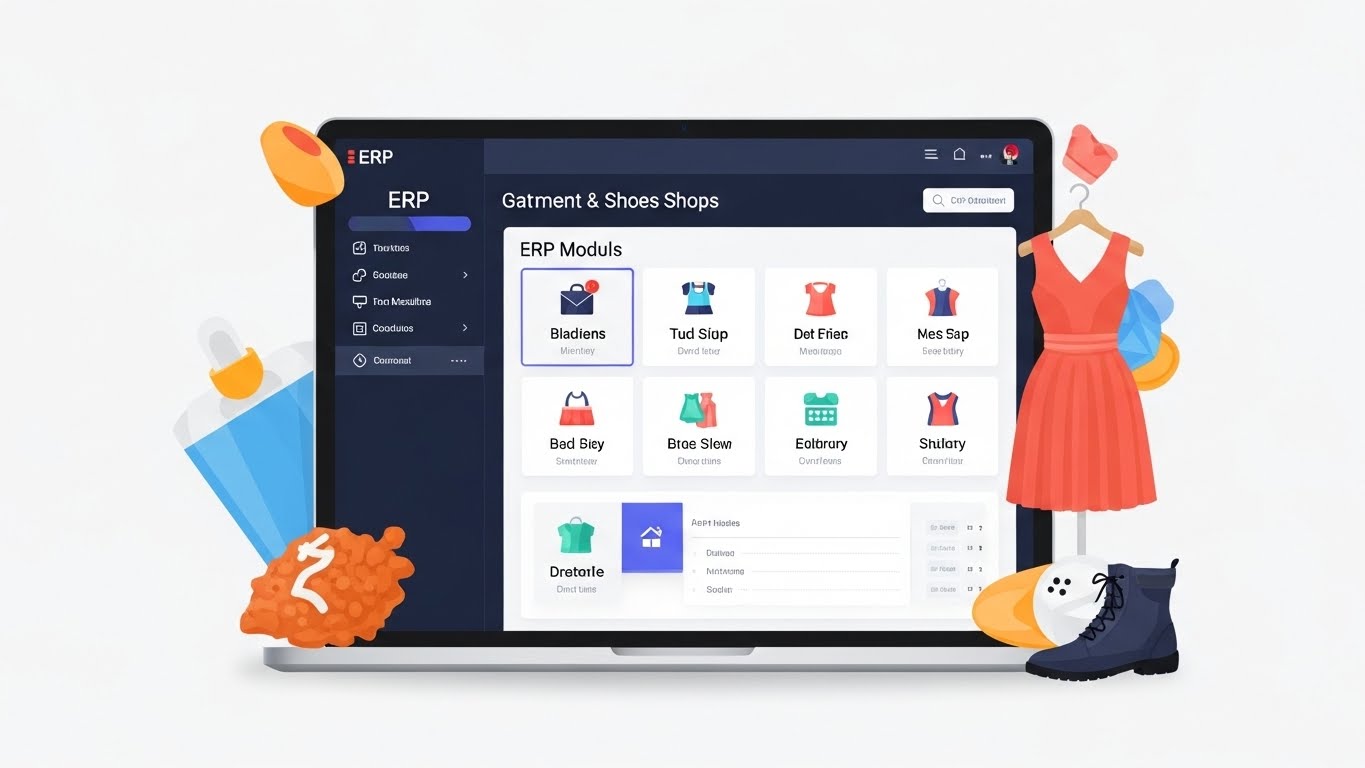
Today, managing a clothing or shoes shop is more than just creating beautiful displays. Customers want a quick response, accurate stock availability and a pleasant shopping experience. Manually handling this can lead to errors, lost sales and frustrated staff. ERP for Garments & Shoes Shops is essential for modern retail businesses.
An ERP system can be used by small businesses or large retail chains. It connects inventory, billing, customers and suppliers in a single platform that is easy to manage. This guide will cover all you need to learn about ERP implementation, its benefits and how it can transform retail operations.
What ERP is and why do garment & shoes shops need it?
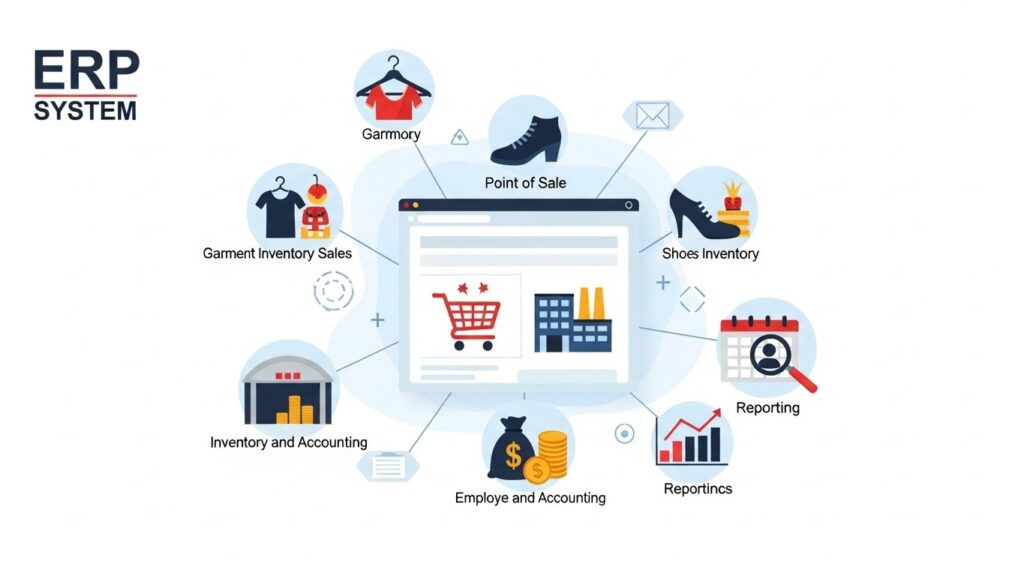
A system integrates your business processes in one central system. This includes:
- Inventory management
- Point-of-Sale (POS) Billing
- Tracking of suppliers and purchases
- Customer relationship management (CRM)
- Accounting
- E-commerce integration
The manual management of these items can lead to:
- Stock mismatches
- Billing errors
- Poor purchasing decisions
- Staff operations that are inefficient
An ERP makes everything automated accurate and available in real time.
Real-Life Example of How ERP Transformed A Garments Shop
Adnan, the owner of a Lahore boutique, was plagued by mismatched stock. Sizes, colours, and designs are often misplaced. Sometimes, popular items were out of stock and other items piled unsold.
He noticed dramatic improvements after implementing an SAP for clothing & shoe shops:
- Inventory tracking in real-time
- Faster and more error-free POS Billing
- Staff errors can be reduced
- Better purchasing decisions
- Profits monthly increased
Adnan says , “Using ERP has been the best decision I’ve ever made.”
The Benefits of ERP in Clothing & Shoes Shops
The top benefits are explained in simple words:
1 Real-Time Inventory Tracking
A ERP allows you to monitor sizes and colors as well as brands and quantity in all branches. You can keep track of which products are selling fast and which ones aren’t. This prevents:
- Overstocking
- Stockouts
- Wasting money on unsold items
2 Faster, Error-Free POS Billing
Billing becomes seamless with an integrated POS system.
- Barcode or QR Code Scanning
- Discounts and promotions automatically applied
- Returns and Exchanges are quick
- Size and color selection is accurate
It is particularly important for stores that have high footfall or multiple product variants.
3 Better Purchasing Decisions
ERP offers insights into:
- Bestsellers
- Size and color preferences of customers
- Seasonal Trends
- Supplier performance
The shop owner can now purchase intelligently to reduce the amount of stock they have.
4 Automatic Stock Reorder Alerts
ERP systems alert you automatically when stocks are low. You can, for example:
Only 3 pairs of Men’s Black Sneakers in Size 42 are left.
You will never miss out on a sale because of a shortage in stock.
5 Manage online and physical shops together
Modern retailers are selling across multiple platforms. ERP integrates off-line stores and on-line channels, such as:
- Shopify
- Facebook/Instagram Shops
- WhatsApp Stores
- Daraz or any other marketplace
The dashboard makes it easy to manage sales by displaying them all on one central dashboard.
Accounting and Finance Made Simple
A fully integrated accounting module tracks
- Daily Sales
- Expenses
- Staff Commissions
- Supplier payments
- Tax Reports
No more errors or manual ledgers.
7 Multi-Branch Control
ERP can help you manage multiple locations if your business is large.
- Transfer stock between branches
- Centralize your purchasing
- Monitor sales and profits by branch
- Manage employee performance
All functions are controlled by a single dashboard.
8 Customer Data Management
ERP stores customer information like:
- Names and contact information
- Purchase History
- Sizes and brands that are popular
You can use targeted promotional to offer discounts for loyal customers or remind them of seasonal sales.
9 Reduce Theft & Mismanagement
ERP records all activities, including:
- Discount usage
- Returns and Voids
- Stock Updates
- Billing changes
This reduces the chances of fraud or error and ensures that all transactions are transparent.
What to look for in ERP software for clothing and shoe shops
1. Inventory Management System
- Size/color-wise tracking
- Barcode generation
- Location of racks and shelves
- Low-stock alerts
- Dead stock reporting
2. POS Billing System
- Checkout and scanning fast
- Payment options
- Offers and discounts automation
- Support for returns and exchanges
- Touch-friendly interface
3. Supplier and Purchase Management
- Tracking your order
- Bills and invoices of suppliers
- Shipment updates
- Comparison of prices and bargaining
4. CRM (Customer Relations Management)
- Loyalty Programs
- Customer database
- Marketing via SMS and Email
- Feedback collection
5. Financial Accounting Module
- General ledger
- Profit & loss reports
- Management of expenses
- Tax compliance
6. Staff and Role Management
- Attendance tracking
- Role-based Access
- Commission calculation
- Employee performance analysis
7. E-Commerce Integration
- Shopify, WooCommerce and other online marketplaces
- Inventory synchronization
- Centralized sales reporting
How to implement ERP in Clothing & Shoes Shops: A Step-by-Step guide
Step 1: Identify Your Needs
- Multi-branch support?
- Accounting integration
- E-commerce integration?
- How many users are there?
- Cloud-based solution or on-premises?
Compare ERP vendors
Check:
- The following are some examples of
- Experience in the Industry
- Pricing
- Customer support
- Training is available
Step 4: Request a demo
Make sure the demo includes:
- User-friendliness
- POS speed
- Inventory tracking
- Reporting capability
Step 4: Migrate Old Data
Include:
- Stock lists
- Supplier details
- Customer Records
- Opening Balances
Step 5: Train Staff
The training ensures that:
- Understanding POS operations by cashiers
- Managers can monitor reports
- Accounting professionals can manage ledgers
Step 6: Go Live
Use ERP to:
- Billing
- Stock tracking
- Purchases
- Accounting
Step 7: Monitor
Check:
- Billing speed
- Stock accuracy
- Customer satisfaction
- Staff Efficiency
- Profit margins
Popular ERP options for Clothing & Shoes Retailers
ERP systems are reliable if they include:
Some offer for garments and shoes shops, or for free.
Final Thoughts
Investing in SAP for clothing & shoe shops can be a wise business decision and not an expense. Benefits include:
- Accurate inventory
- Billing faster
- Better purchasing decisions
- Profits increase
- Customers who are satisfied
- Staff errors can be reduced
Implementing ERP will help retailers grow, streamline their operations and stay on top of the competition.
