

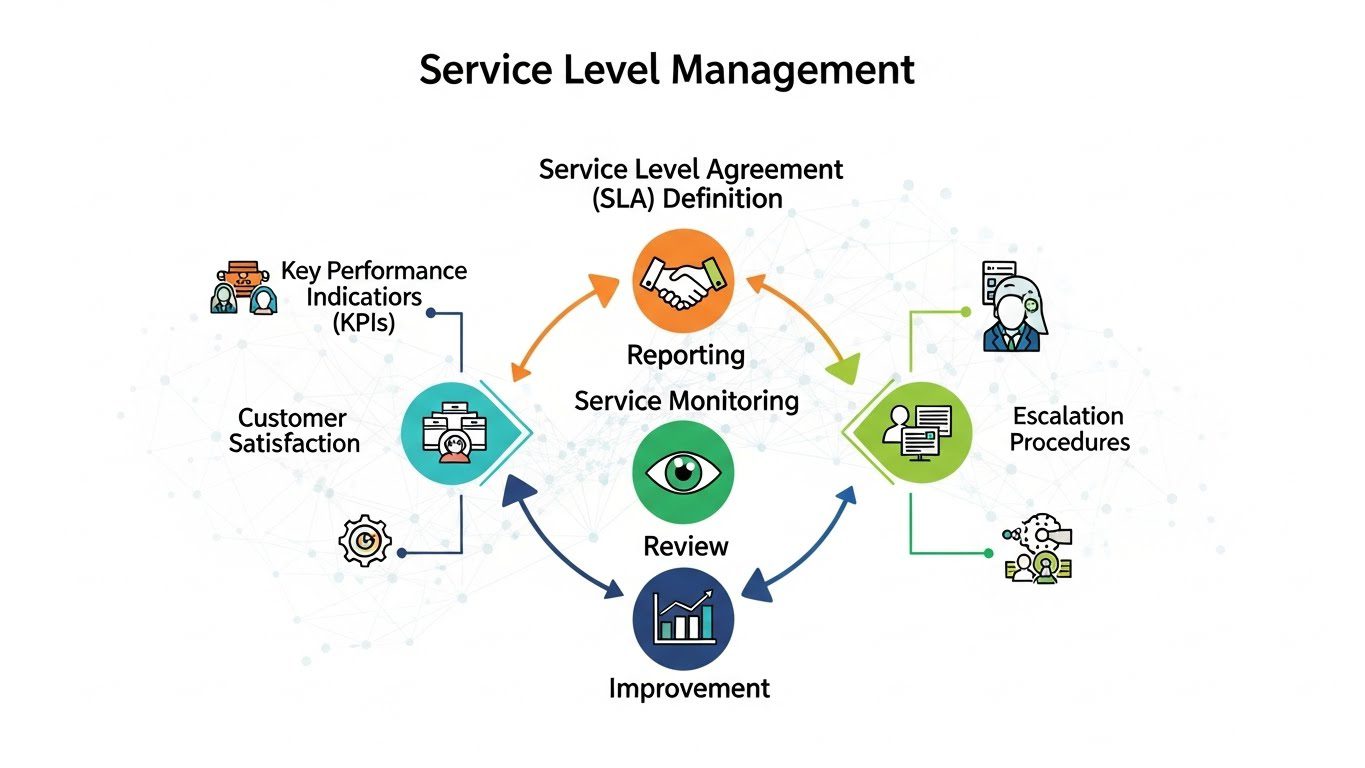
Service level management is the foundation for reliable service delivery within any organization. Service Level Management is a powerful tool that can be used to ensure service levels are consistently met, whether you manage IT systems, customer services, or business operations. This guide will teach you everything you need about Service Level Management including its processes and tools.
Service level Management ITIL 4 Framework for Modern IT Services
The framework is a structured approach for service-level management that emphasizes value cocreation, customer focus and continuous improvement.
Takeaways from the conference:
- Define Service level Agreements (SLAs), aligned to business outcomes
- Integrates with ITIL 4 process like incident management and change management.
- Supports continuous improvement and measurement of services
By using ITIL4 guidelines organizations can ensure that their Service Level Management process are structured, measurable and aligned to business priorities.
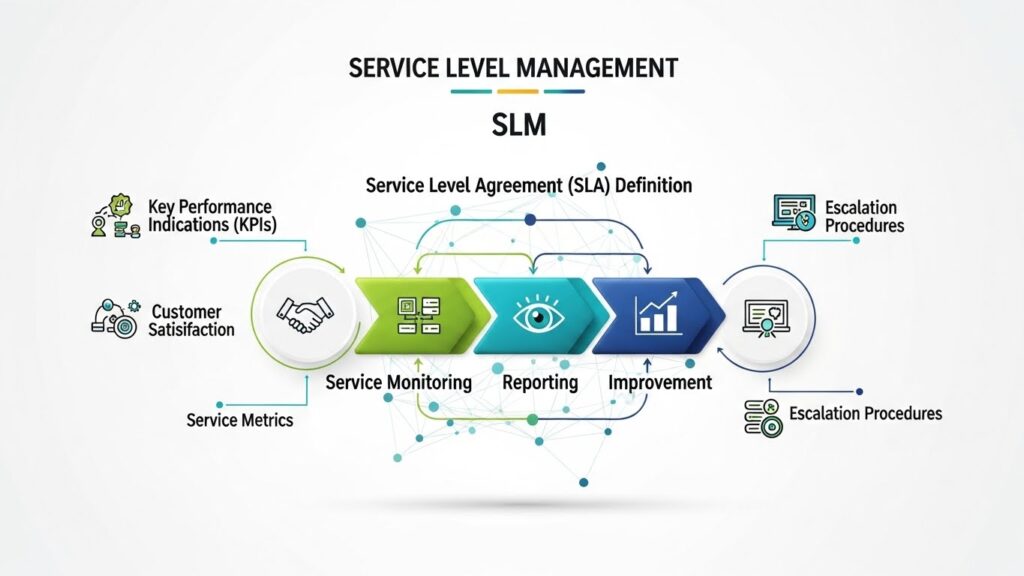
Careers and Roles in Service Level Management
Many companies are looking for professionals who specialize in service level management jobs. The key roles include:
- Analyst: Tracks KPIs and improves services.
- IT service manager: Integrates Service Lifecycle Manager with IT operations
- Incident & Problem Manager: Ensures SLA compliance during disruptions
Skill set for SLM roles
- Understanding ITIL 4 principles
- Tracking SLAs and KPIs
- Strong communication skills
- ServiceNow or tools are familiar to users.
Careers in SLM offer highly competitive salaries and a clear path to growth.
Service level Management Interview Questions: What to prepare?
Understanding both theory and application is required to prepare for questions on service level management. Common questions include:
- Why is Service Level Management important?
- Explain in detail the SLM process.
- How can you report KPIs and measure SLA compliance?
- Please give an example of how you solved a issue related to service level management.
- How do you deal with SLA breaches
You can show your knowledge and competence by preparing examples based on your own experience.
Service level management salary: Industry trends and insights
Salary levels for roles in service level management are dependent on experience, location and organizational size.
- Entry-level SLM analyst: $55,000 to $70,000/year
- Mid-level SLM manager: $75,000 to $95,000/year
- Senior Service Delivery Manager: $100,000-$130,000/year
Organisations that offer ITIL 4 aligned services and ServiceNow based management are often compensated more for their technical complexity.
Service Level Management ServiceNow: Streamlining IT Service Delivery
ServiceNow offers a number of features that automate service management.
- Dashboards for SLA and SLO Tracking
- Automated incident Management workflows
- KPIs and Performance Reporting
- Automated notification and escalation
Companies that use ServiceNow for SLM are able to reduce errors in manual processes, improve SLA compliance and gain real-time insight into service performance.
Resources for Learning
These resources include guides and templates for Service Level Management PDF, which are used by many professionals to better understand concepts or document processes. These resources include:
- SLA templates
- Sample KPIs
- Diagrams of the process
- Workflows for incident response
Downloading PDFs will help both novices and more experienced practitioners to accelerate their training, documentation, or onboarding.
Service Level Management Example: Real-World Use Cases
An example of a practical management service level can be customer support SLA.
- Target : Respond within one hour to tickets of high priority
- Metric : Percentage tickets resolved within target
- Escalation: Notify manager if SLA breached
- Monthly Dashboard of SLA Compliance
Other examples are IT service availability commitments or Cloud service response SLAs.
Service Level Management Process: Step-by-Step Implementation
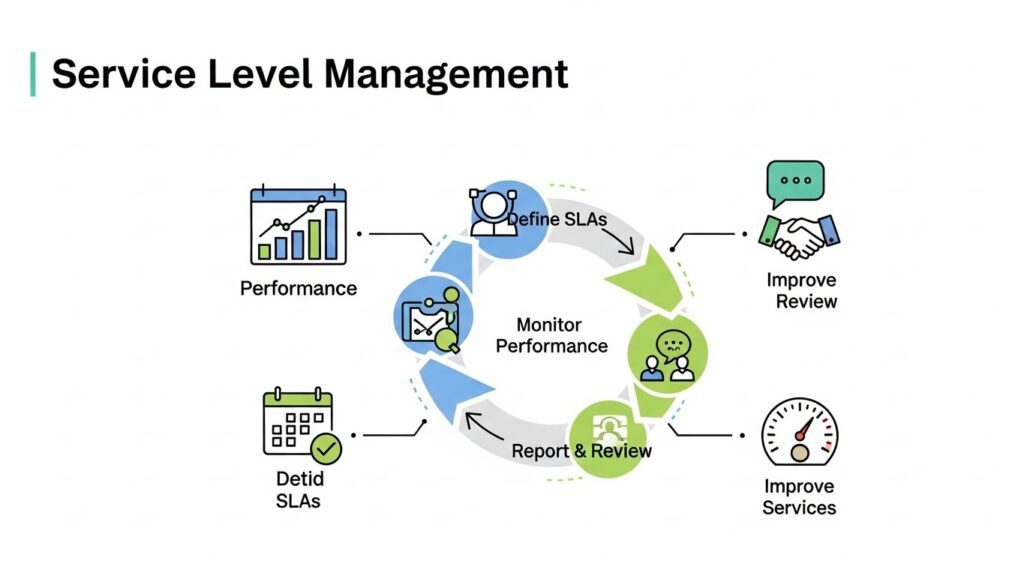
The service level management process will ensure that your organization delivers service levels consistently. Key steps:
- Map Services — Show all the services you offer.
- Define the SLAs and SLOs — Specificate clear performance objectives.
- Implement Monitoring Tools Track KPIs in Real Time.
- Create Incident and Escalation Procedures – Ensure timely response.
- Review & report — Create reports to measure compliance.
- Continuous improvement — Adjust process and SLAs on the basis of insights.
